

Description

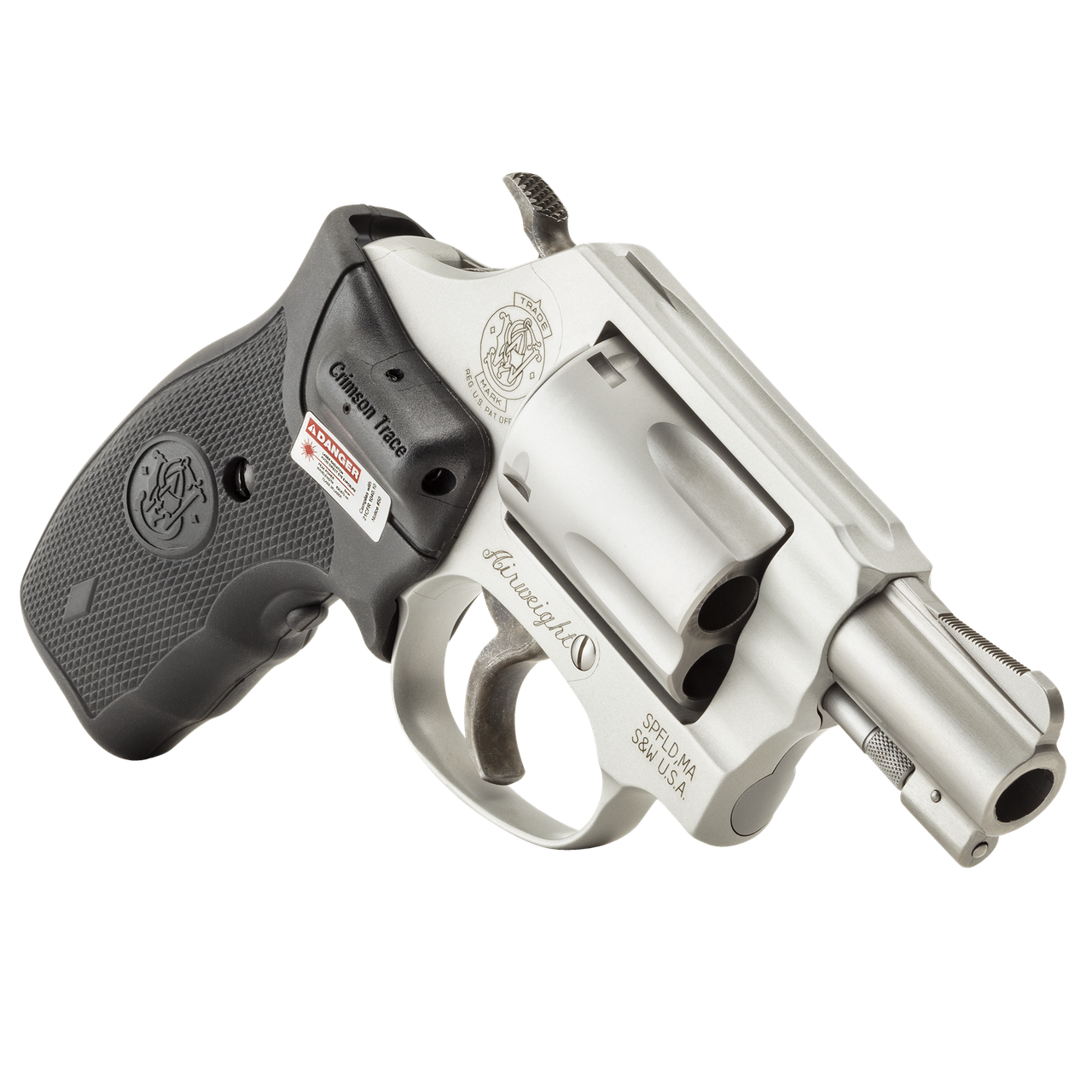
The Smith Wesson 637 Airweight 38 Special is The Smith Wesson 637 Airweight 38 Special is the Chiefs Special Airweight, and it has been the default answer to “what small revolver should I carry” for longer than most shooters have been alive. An aluminum alloy frame carries a stainless steel cylinder and barrel, which drops the weight to around fifteen ounces empty. That is light enough that you will actually carry it, which is the entire point.
The exposed hammer means you can thumb it back for a deliberate single action shot, which the shrouded and enclosed hammer models cannot do, and the 1.875 inch barrel keeps the whole package short enough for a pocket holster or an ankle rig.
Smith Wesson 637 Airweight 38 Special Smith Wesson 637 Airweight 38 Special Weight, Hammer And Carry Options
Weight is the whole argument for the Smith Wesson 637 Airweight 38 Special. A steel J-frame runs around twenty-two ounces and an Airweight around fifteen, and that seven ounce difference decides whether a gun rides on your belt every day or stays in a safe. Aluminum alloy in the frame and stainless in the cylinder and barrel is the combination that gets you there without giving up corrosion resistance.
The exposed hammer sets this model apart from its siblings. A 642 or 442 has an enclosed hammer that cannot snag but also cannot be cocked. The 637 gives you the choice: a long double action pull for defensive work, or a light single action pull when you have time and want precision. If you carry in a pocket, be aware that the hammer spur is the part most likely to catch on fabric, and a proper pocket holster solves that.
Sights are fixed, a groove in the topstrap and a ramp up front, which is standard for this class and honest about the intended distance. This is a handgun for arm-length to across-a-room work, not a target revolver.
Smith Wesson 637 Airweight 38 Special Recoil, Capacity And Honest Drawbacks
Light guns kick. The Smith Wesson 637 Airweight 38 Special is rated for 38 Special plus P ammunition, and plus P loads out of a fifteen ounce revolver are genuinely unpleasant. The recoil is sharp rather than heavy, and the small grip concentrates it into the web of your hand. Most owners find that twenty-five rounds is about the limit of a comfortable practice session, and many practice with standard pressure ammunition and save the plus P for carry.
Five rounds is the other honest limit. A J-frame cylinder holds five, and reloading a revolver under stress is slower and clumsier than swapping a magazine. Speed strips and speedloaders help, but only with practice. If capacity is your primary concern, a small semi-automatic will hold two to three times as much in a similar footprint.
The double action trigger is long and heavy, which is appropriate for a pocket gun and frustrating for a new shooter. It smooths out with use, and dry fire with snap caps helps more than anything else. Do not have it lightened below factory spec on a carry gun.
Practical accuracy is limited by the sights and the short barrel, not by the gun. At seven yards it will do everything you ask. At twenty-five it takes real work.
Smith Wesson 637 Airweight 38 Special Specifications
- Manufacturer part number: 163050
- UPC: 022188630503
- Caliber: 38 Special, rated for plus P
- Capacity: 5 rounds
- Barrel: 1.875 inches
- Frame: aluminum alloy, J-frame
- Cylinder and barrel: stainless steel
- Hammer: exposed, single and double action
- Sights: fixed, integral rear notch and ramp front
- Weight: approximately 15 ounces unloaded
Shoppers comparing the Smith Wesson 637 Revolver against enclosed hammer siblings are really choosing between snag resistance and a single action option. As a 38 Special J Frame Revolver it sits at the center of the small-frame carry market, and as a Lightweight Carry Revolver it makes the trade most people should make: a little more recoil in exchange for a gun light enough to wear every day.
Why Buyers Choose the Smith Wesson 637 Airweight 38 Special
Buy the Smith Wesson 637 Airweight 38 Special if you want a carry revolver that disappears in a pocket or on an ankle and works without thinking. Revolvers do not care about limp wrists, do not need a slide racked, and are about as simple as a firearm gets. The exposed hammer adds a single action option that the enclosed hammer models cannot offer, which some shooters value for a deliberate shot.
Skip it if you want to shoot a lot at the range, because light plus P revolvers punish extended practice and you will not enjoy it. Skip it if five rounds worries you. And skip it if you carry loose in a pocket without a holster, where the hammer spur can catch, in which case an enclosed hammer model is the better choice.
Who Should Buy The Smith Wesson 637 Airweight 38 Special
The Smith Wesson 637 Airweight 38 Special suits This revolver suits everyday concealed carriers, backup gun carriers, shooters who want the simplest possible manual of arms, and anyone whose clothing or job makes a semi-automatic impractical to hide. It is a poor fit for high-volume range shooters, for anyone recoil-sensitive, and for new shooters who have not yet built the hand strength for a heavy double action pull. All firearm sales ship to a licensed FFL dealer for transfer, and handgun and carry rules vary by state, so confirm your local law before ordering.
Learn more from Smith and Wesson, or browse the rest of our firearms selection.
Every firearm we list ships to your chosen FFL and is transferred there after a background check.


Reviews
There are no reviews yet.