
Description
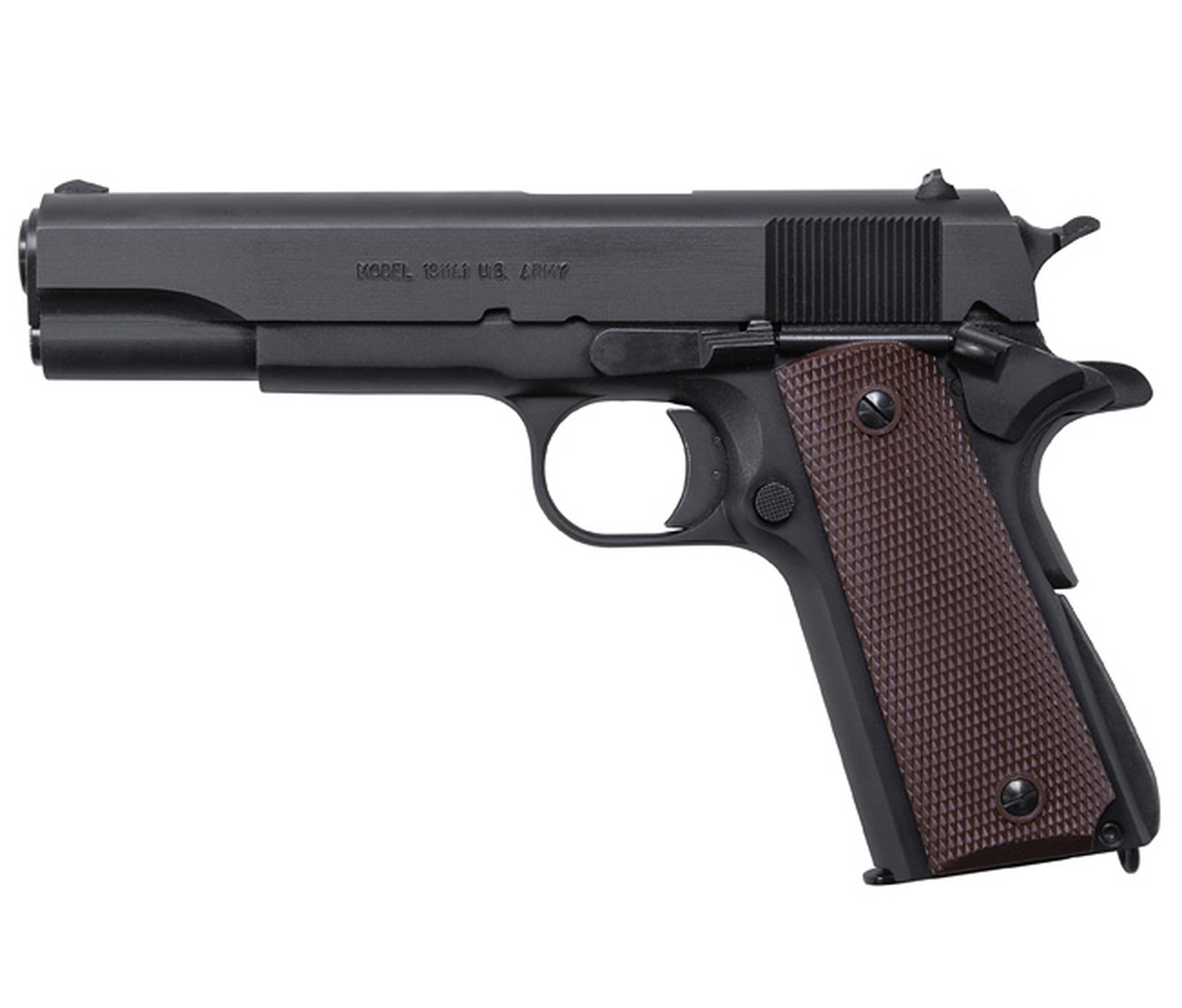
The Auto-Ordnance 1911A1 GI Spec 45 ACP is a faithful reproduction of the pistol the United States carried through two World Wars, Korea and Vietnam. No beavertail, no extended controls, no oversized sights: just the gun as John Browning designed it and as the Army issued it.
Auto-Ordnance builds them in Worcester, Massachusetts with a stainless steel barrel and a matte black carbon steel slide and frame, fitted with the brown checkered grips the original wore.
Auto-Ordnance 1911A1 GI Spec 45 ACP Build
The five-inch barrel is stainless steel, which is one of the few departures from strict GI specification and a welcome one, since it resists corrosion far better than the carbon steel barrels of the period. Slide and frame are carbon steel finished matte black.
The slide, sear and disconnector are heat treated for durability across many thousands of rounds. This is a working pistol, not a display reproduction, and the internals are built accordingly.
Sights, Controls and Grips
Sights follow the original low-profile pattern: a blade front and a rear drift adjustable for windage. They are small by modern standards, which is exactly correct for a GI pistol and part of why the gun looks right in the hand.
Controls are the original pair of safeties, a manual thumb safety and a grip safety, laid out precisely as Browning specified. The brown checkered polymer grips reproduce the look of the wartime originals without the fragility of period plastic.
Specifications
- Model: 1911A1 GI Spec
- Manufacturer part number: 1911BKO
- Caliber: .45 ACP
- Capacity: 7+1
- Barrel length: 5 in., stainless steel
- Slide: matte black serrated carbon steel
- Frame: matte black carbon steel
- Grips: brown checkered polymer
- Sights: blade front, rear drift adjustable for windage
- Safeties: manual thumb safety and grip safety
- Weight: 39 oz.
- Overall length: 8.6 in.
- Action: single action
- Hand: right
- UPC: 602686251112
Why Buy a GI Pattern 1911
Modern 1911s pile on features: beavertails, ambidextrous safeties, night sights, flared ejection ports. All of it works, and all of it moves the pistol further from the gun that actually served. If what you want is the M1911A1 experience, a modernized pistol will not give it to you.
There is also a practical argument. Fewer added parts means fewer things to fit, adjust or break, and GI-pattern pistols have a long reputation for simply running with standard 230 grain ball ammunition.
A Platform to Build On
Because it is built to GI specification, standard 1911 parts drop in. Beavertails, extended safeties, sights, hammers, triggers and grips from the enormous 1911 aftermarket all fit, which makes this an inexpensive base for a project pistol.
Magazines are the common single-stack seven-round pattern, so spares are cheap and available everywhere. Holsters are equally easy, since Government dimensions have not changed in over a century.
Shooting a GI 1911
An all-steel Government-size .45 weighs 39 ounces, and that weight is what makes the cartridge so comfortable. Recoil is a push rather than a snap, the trigger breaks straight back, and the low bore axis keeps muzzle rise modest.
The one thing to know is the grip safety. GI-pattern tangs sit lower than modern beavertails, so a very high grip can produce hammer bite on some hands. Most shooters never notice it; if you do, an aftermarket beavertail is a simple fix.
Who Should Buy It
This pistol suits the collector or history enthusiast who wants an accurate M1911A1 without paying collector prices for an original, the shooter who prefers a simple gun, and anyone looking for an affordable steel 1911 to build from.
Learn more from Auto-Ordnance, or browse the rest of our firearms selection.
Every firearm we list ships to your chosen FFL and is transferred there after a background check.


Reviews
There are no reviews yet.